From Worry's Grip to Wise Action: Your 24-Hour Shift
24 February 2026
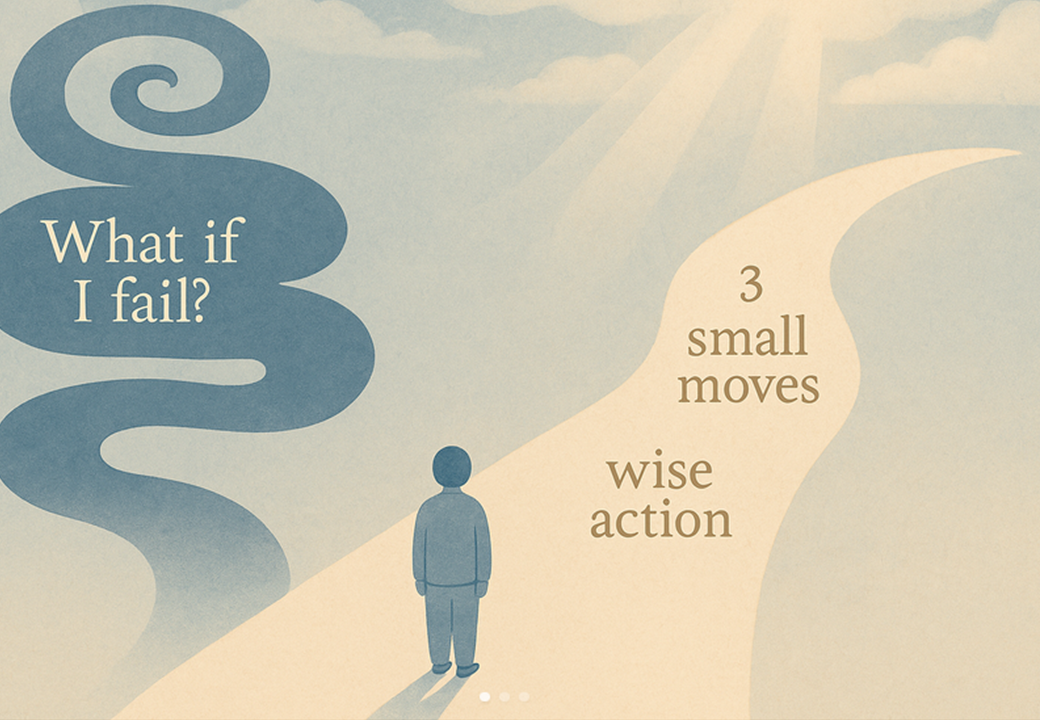
Worry is normal. It is your mind trying to protect what you value, scanning for threats so you don’t get hurt again. But when it runs the show, it quietly steals your presence, your sleep, and your momentum toward the life you actually want. We are done letting fictional futures own our days.
One Practice to Do Today
Pick one worry that keeps circling back ongoingly and walk it through this simple practice:
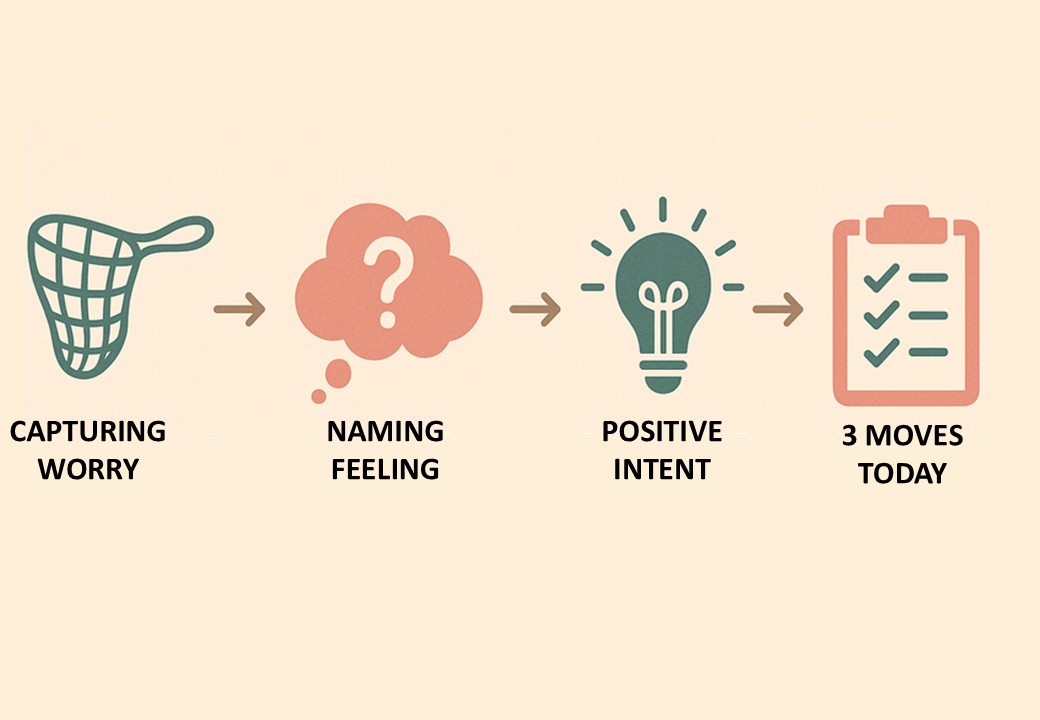
1. Capture one persistent worry and then:
o Write it in a sentence, as it actually sounds in your mind.
o Example: “What if I never get on top of my finances?” or “What if this relationship falls apart?”
2. Next, name the feeling underneath:
o Ask: “What am I really feeling?”
o It might be fear, shame, overwhelm, sadness, or helplessness. Simply naming it often calms the nervous system a notch.
3. Next, find the positive intent:
o Beneath every worry is a part of you trying (clumsily) to care for something: safety, love, stability, purpose, belonging.
o Ask: “What is this worry trying to protect or create for me?”
o For example:
(a) “I worry about money” → I want stability and freedom.
(b) “I worry I’ll be alone” → I want connection and to feel loved.
4. Write three moves to undertake over the next 24 hours:
o Now shift from problem-obsessing to solution-searching.
o Ask: “What are three small, concrete actions I can take in the next 24 hours to honour that positive intent?”
o For the money worry, that might be:
(a) Check my bank balance and list all current bills.
(b) Cancel one non-essential subscription.
(c) Book 15 minutes tomorrow to explore one income-boosting idea.
o For the relationship worry, it might be:
(a) Send one honest, kind message.
(b) Schedule a time to talk instead of rehearsing arguments in my head.
(c) Do one nurturing thing for myself so I’m not entering the conversation empty.
When worry stops looping around the problem and starts looking for the next wise move, it becomes useful, even healthy.
Rewriting Your “what if” Loops
Your mind has rehearsed “what if” disaster scripts for years, so it needs new lines to read from. Here are examples to train it toward progress and possibility. Go from the old script ( > ) to the new script:
- Familiar “what if” > New “what if” that serves you
- What if I fail? > What if I grow stronger and find a better path?
- What if I look stupid? > What if I learn faster than I expected?
- What if they reject me? > What if this helps me find the people who truly value me?
- What if I can’t cope? > What if I discover I’m more capable than I thought?
- What if I make the wrong choice? > What if any choice gives me feedback I can grow from?
- Familiar “what if” about life > New “what if” that opens possibility
----------------------------------------------------------------------
- What if things never change? > What if one small change today starts a quiet turning point?
- What if I waste my potential? > What if experimenting now is exactly how I find my path?
- What if I disappoint people? > What if being honest attracts the right expectations?
- What if I miss my chance? > What if there are more chances than my fear can see right now?
- What if it all falls apart? > What if I’m able to rebuild on stronger, truer foundations?
Use these as templates to change your thinking. Take your own loudest “what if,” flip it into a question that points toward growth, learning, or support, and write it down. Repetition is how your brain learns a new default.
A Night-time Release Ritual
To keep worry from hijacking your sleep, give your mind a clear off-ramp at the end of the day.
1. Close the loop on your plan
o Re-read the three small moves you’ve chosen for your key worry.
o If one needs to happen tomorrow, put it in your calendar or on a visible list so your brain knows, “This is parked, not forgotten.”
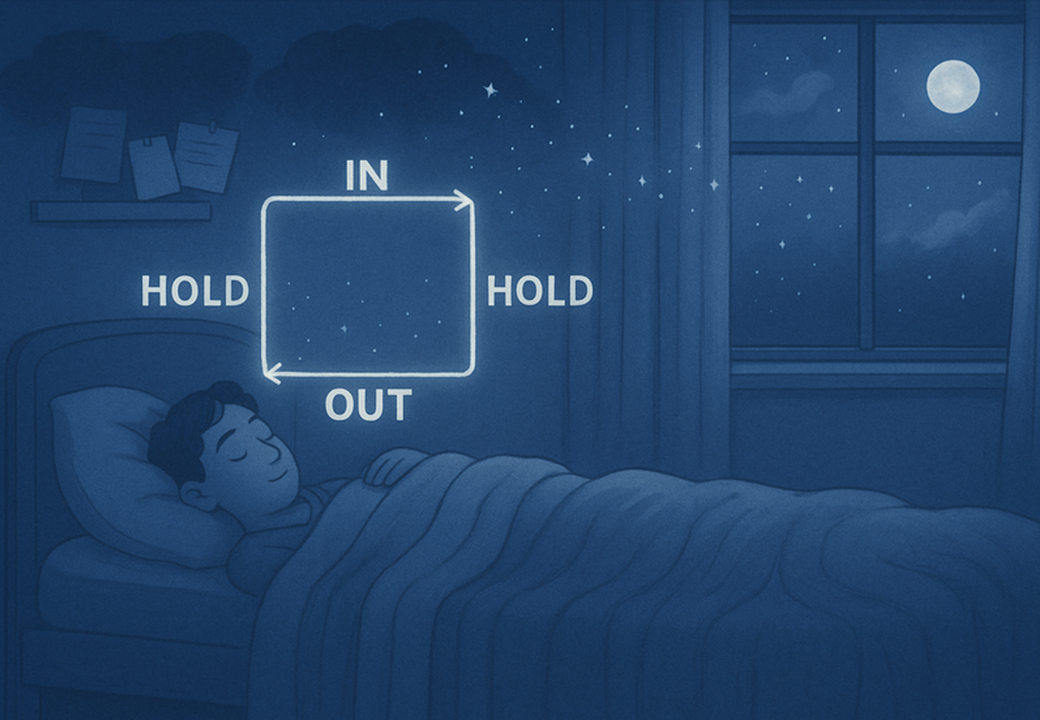
2. Breathe to signal “safe enough for now”
o Sit or lie comfortably.
o In for a count of four, hold for four, out for four, hold for four, and repeat several times (a simple box breath many people use to calm their system).
o As you breathe, gently tell yourself: “There’s a plan. I’ll handle the next step tomorrow.”
3. Release what’s left
o Imagine placing today’s worries on a shelf, or in a box, outside your bedroom.
o You are not abandoning your life; you are choosing not to solve tomorrow at 2am.
You are training your body to associate bedtime with restoration, not rumination.
From Worry to Responsibility
You do not need to eliminate worry to live better. You need to stop letting it drive, and instead listen to what it values, then respond with intention. That looks like:
Catching one worry instead of letting ten run wild.
Asking, “What is this trying to protect?” instead of “Why am I like this?”
Choosing three doable actions instead of replaying the same scene in your mind.
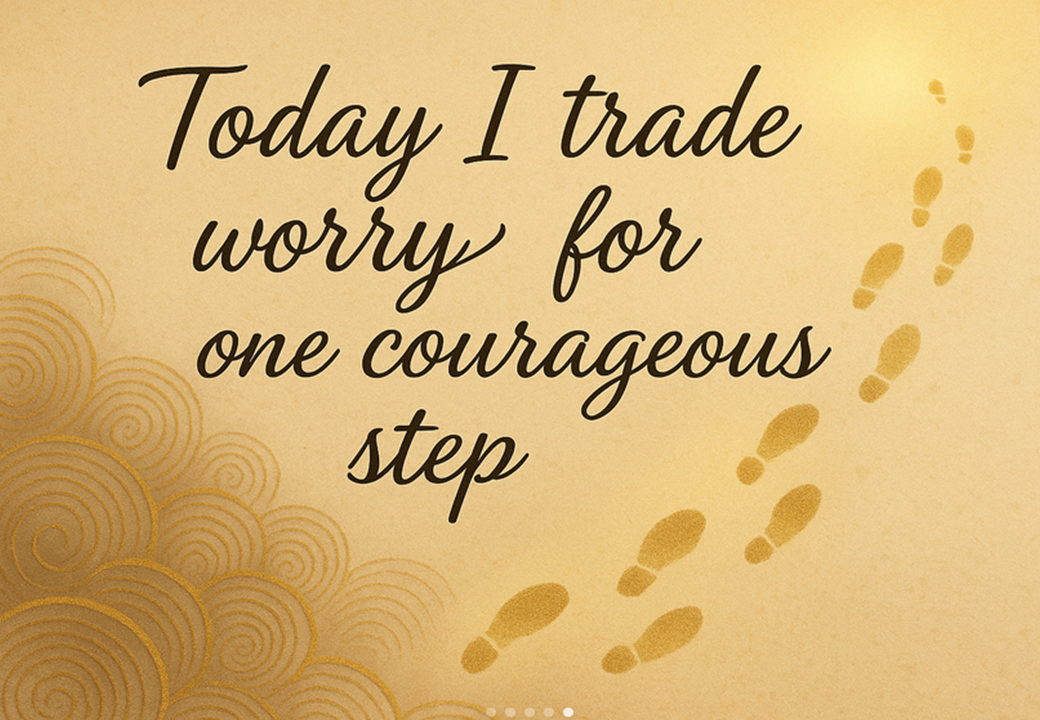
To anchor this shift, end today with a decision and a small public commitment. In your journal, or in a note you can see tomorrow, write:
“Today I trade worry for one courageous step.”
If you like, tell one trusted person what that step is. Not your whole five-year plan—just today’s move. That single declaration raises necessity and gives your brain a new job: to look for actions, not dangers.
You can handle this. You don’t need a different mind to live with more peace; you need more intention, a tiny plan, and the courage to follow through today. Choose to act now, even if your hands shake a little.
